- Home
- News
- 2026 China Steel Pipe Export Landscape Reshaped: Opportunities and Challenges Under Policy Overhaul, Geopolitical Turmoil, and Standard Upgrades
2026 China Steel Pipe Export Landscape Reshaped: Opportunities and Challenges Under Policy Overhaul, Geopolitical Turmoil, and Standard Upgrades
If you want to know more information, like quotation, products, solutions, etc., please contact us online.
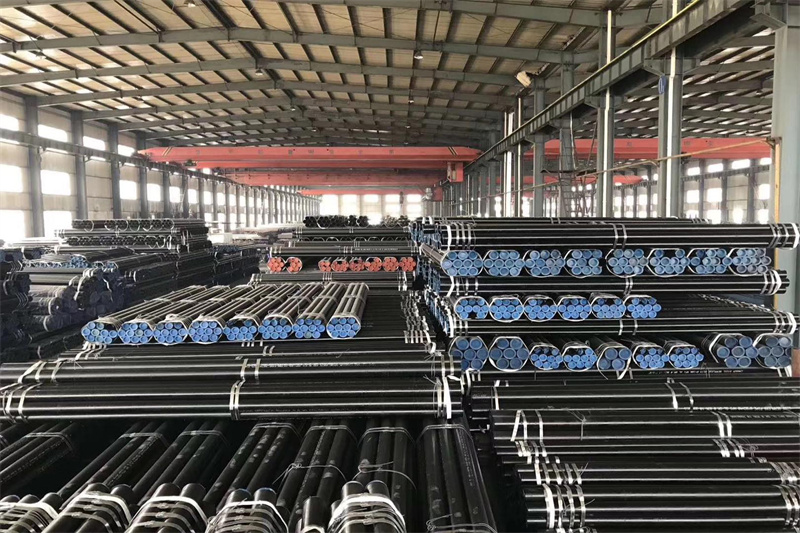
Tianjin Sanon Steel Pipe Co., Ltd. is a stockist. Our stock factory is in Cangzhou City, Hebei Province. Our main sources of goods are boiler pipes, and the representative materials are ASTM A335 P5/P11/P91/P92, ASME SA-106/SA-106M GR.B, GB/T 3087-2008 10#/20#. The representative materials of pipeline pipes are API 5L, API 5CT, the representative materials of petroleum cracking pipes GB/T 9948 are 15MoG/12CrMoVG. GB/T 6479-2013 represents the material 10#/20#, heat exchanger tubes SA179/SA210/SA192, etc., mechanical tubes GB/T 8162 represent the material 10#/20#/Q345/42CrMo, EN10210 represents the material S355JOH/S355J2H, gas cylinder tubes GB1 8248, represent the material 34CrMo4/30CrMo.
Since the start of 2026, China’s steel pipe export market has undergone a profound structural transformation. The full implementation of an export license management system, escalating trade frictions, shipping disruptions caused by Middle East geopolitical conflicts, and a major update to API standards after years of dormancy are all converging. China’s steel pipe exports are shifting from volume‑driven, extensive growth to a new era defined by compliance, quality, and brand competitiveness.
I. Industry‑Wide Anti‑Involution Campaign: Over 40 Trade Associations Unite Against Price Wars
On June 16, 2026, the Circulation Branch of the China Iron and Steel Association, together with more than 40 provincial‑level steel circulation trade associations nationwide, issued the Initiative Against Involution in the Steel Circulation Industry. The initiative publicly calls for an end to below‑cost dumping, malicious order‑snatching, and urges the regulation of steel export order to avoid overseas reckless bidding that triggers trade friction.
The initiative reveals the stark reality of “involution”: in 2025, China’s crude steel output reached 961 million tonnes, down 4.4% year‑on‑year, but apparent consumption was only 829 million tonnes, a decline of 7.1%. Meanwhile, steel exports hit 119 million tonnes, up 7.5%, but average export prices fell 8.1%, showing a classic pattern of “volume up, price down.” Entering 2026, steel price indices remain near multi‑year lows, and profits of key steel enterprises in their core business dropped 85.6% year‑on‑year.
The initiative clearly states that “there are no winners in price wars” and calls for the industry to shift from a vicious cycle of price‑ and volume‑based competition towards quality, service, and brand‑based competition. This marks the first time the steel circulation sector has widely responded to the national “anti‑involution” policy, signalling that the anti‑involution movement is extending from production to distribution. For steel pipe exporters, relying solely on low prices to capture overseas markets will become unsustainable. Compliance, high‑end product positioning, and branding are emerging as new competitive thresholds.
II. New Export License Regime Takes Effect: Welded and Seamless Pipes Must Now “Go Abroad with a Licence”, Reshaping Order
From January 1, 2026, the Ministry of Commerce and the General Administration of Customs imposed export licence management on certain steel products, covering all major tariff codes for welded pipes. The new rules require enterprises to complete qualification reviews, contract filings, quality inspections, and customs declaration procedures. The core objective is to regulate export order and curb vicious low‑price competition. Meanwhile, seamless pipes have also been included in the export licence management scope.
The impact of the new policy has already become visible. In March 2026, China exported 393,300 tonnes of welded pipes, down 22.94% year‑on‑year; cumulative exports for January‑March totalled 1.3072 million tonnes, down 3.76% year‑on‑year. This suggests that China’s welded pipe exports may be moving away from a rapid growth cycle towards a structurally pressured adjustment phase.
In the short term, the new rules directly increase compliance costs and extend order delivery timelines. In the long run, however, the export licence system will force a domestic industrial upgrade, push export quotations back to rational levels, and effectively reduce international trade friction. Steel pipe suppliers with complete certification, standardised export procedures, and strong compliance capabilities will gain a competitive edge in this new regulatory environment.
III. Trade Barriers Continue to Escalate: Anti‑Dumping Investigations Spread from Developed to Developing Countries
In the first half of 2026, a series of trade remedy investigations targeting Chinese steel pipes were launched, with a notable trend of investigation initiators expanding from developed to developing nations.
Eurasian Economic Union – On June 10, 2026, it released the final disclosure of the first sunset review of anti‑dumping duties on stainless steel welded pipes originating in China, recommending a five‑year extension of duties. The products covered include circular, square, or rectangular cross‑section corrosion‑resistant stainless steel welded pipes.
Ukraine – On May 26, 2026, it issued a final affirmative sunset review ruling on hot‑finished seamless steel pipes from China, deciding to maintain anti‑dumping duties for another five years, with most Chinese producers/exporters subject to a 51.52% duty rate.
Australia – On June 5, 2026, it made an anti‑circumvention final ruling on welded tubes (hollow structural sections) imported from China (including mainland), South Korea, Malaysia, and Taiwan region of China, finding that some exporters made minor alterations (drilling, punching, or perforation) to avoid anti‑dumping duties.
The continuous escalation of trade barriers means that a pure low‑price competitive model is no longer viable. Suppliers with API, CE, ISO and other international certifications, and who can provide full traceability documents and compliant shipping paperwork, will earn greater trust from international clients in an environment of intensifying trade friction.
IV. Middle East Geopolitical Turmoil Disrupts Exports: Seamless Pipe Export Pattern Changes
The Middle East has long been the largest export market for China’s seamless pipes, but geopolitical conflicts since March 2026 have significantly altered this landscape. According to Mysteel data, from January to April 2026, China’s seamless pipe exports to the Middle East accounted for 28.93% of total seamless pipe exports, down from 38.32% in 2025.
The Gulf Seven countries were hit hardest. In March‑April 2026, seamless pipe exports to these seven countries fell by 231,400 tonnes year‑on‑year, a drop of 72.2%. Among them, exports to the UAE plunged 88.80% in April, Qatar down 95.31%, and Iraq down 99.34%. The geopolitical conflicts caused disruptions in the Strait of Hormuz, leading to longer shipping routes, higher freight costs, extended lead times, and a slowdown in some infrastructure and oil‑and‑gas projects in the Middle East, weakening seamless pipe demand in the short term.
However, over the full year, China’s seamless pipe exports to the Middle East are expected to decrease by about 171,000 tonnes, down 23.25%, accounting for roughly 8.78% of total seamless pipe exports – an impact that remains manageable. Notably, Iran, under sanctions, has experienced a “capacity collapse” in steel production, and China has partly filled its market gap. In the first quarter, cumulative seamless pipe exports reached 1.4507 million tonnes, up 2.52% year‑on‑year, indicating that long‑term overseas demand has not fundamentally shrunk.
In this context, steel pipe suppliers with ample ready stock, multi‑port shipping capabilities, and 7‑15 day emergency delivery can effectively hedge against supply chain risks caused by geopolitical volatility and meet clients’ core demand for stable delivery.
V. API Standard Gets Major Update After Years: Technical Thresholds Raised Again
On June 2, 2026, API officially released the 47th edition of the Line Pipe standard (API Spec 5L). As API’s first standard, it has evolved over a century to provide technical assurance for the safety and reliability of oil‑and‑gas transmission pipelines.
The new edition includes updates in more than 15 technical areas, with a particular focus on strengthening quality control for high‑frequency welded pipes and, for the first time, clarifying technical requirements for CO₂ transmission pipelines, covering materials, manufacturing, inspection, and special environmental applications, further enhancing pipeline operational safety and industry standardisation.
For exporters of API 5L GR.B / X42 / X52 / X60 seamless line pipes and high‑frequency welded pipes, the standard upgrade means higher technical barriers and stricter quality control requirements. Suppliers that can quickly adapt to international standard updates and continuously improve product technology will secure a stronger position in the global oil‑and‑gas pipeline market.
Outlook: Compliance Capability and Supply Chain Resilience Become Core Competitiveness
The multiple shifts in the first half of 2026 indicate that China’s steel pipe exports are leaving behind the “volume‑first” era. Export licence management brings order; escalating trade barriers raise entry thresholds; geopolitical conflicts test supply chain resilience; and the API standard update increases technical requirements. These four variables point to one common trend: suppliers with international certifications, standardised export processes, and ready‑stock fast‑delivery capabilities will emerge as winners in the next round of market consolidation.
Sanon Pipe adheres to its four core values: High Standards, Fast Delivery, Zero Risk, and Green & Low Carbon. The company maintains a permanent stock of 20,000 tonnes of alloy steel pipes, carbon steel pipes, seamless pipes, welded pipes, and hollow sections. It holds key certifications including API, CE, and ISO 9001:2015, and operates a CNAS‑accredited laboratory with over 240 internal control checkpoints to guarantee zero‑risk quality. Under the new export licence regime, the company has established standardised contract review, documentation, and customs declaration processes, supporting L/C with zero discrepancies. To counter Middle East geopolitical disruptions, its multi‑port shipping capability (Tianjin, Qingdao, Shanghai) and 7‑15 day emergency order delivery effectively safeguard clients’ supply chains.
Sanon Pipe
Ready Stock: 20,000 tonnes of alloy & carbon steel seamless pipes, welded pipes, and hollow sections
Core Products:
Boiler Pipes: ASTM A335 P92/P91/P22/P11/P5; ASME SA106/SA179/SA192/SA210
Seamless Line Pipes: API 5L GR.B / X42 / X52 / X60 (1/2″–24″ OD)
Welded Pipes & Hollow Sections: EN10210/EN10219 S355JOH/S355J2H, EN10217 P235TR1/P265TR1
Certifications: API, CE, ISO 9001:2015; CNAS‑accredited lab; L/C zero‑discrepancy support; product carbon footprint data available
Delivery: Standard 15‑30 working days; urgent orders 7‑15 days
+86 22 5865 8800 / +86 153 2010 0890
info@sanonpipe.com
www.sanonpipe.com